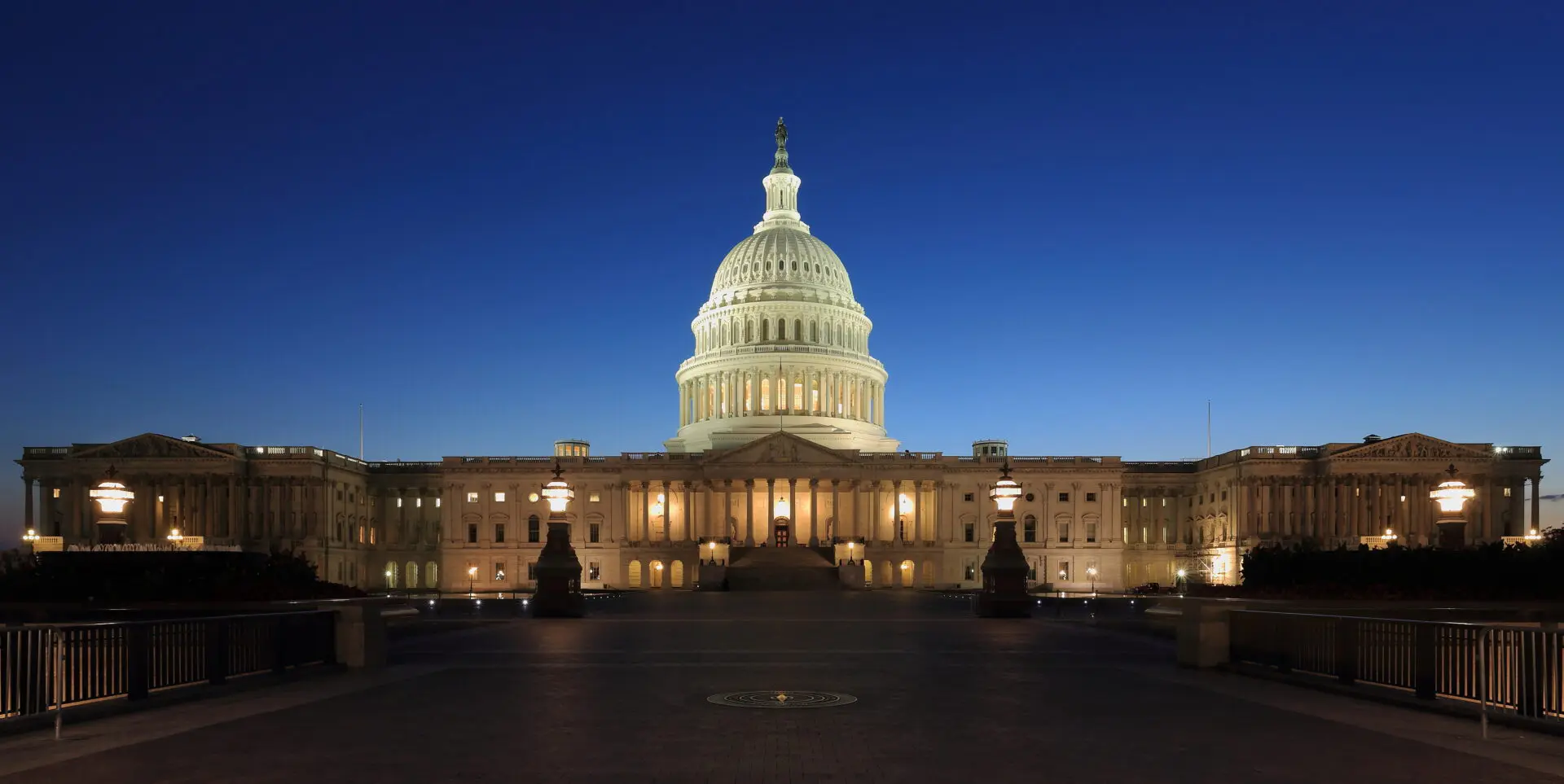
After the midterm elections, Democrats should prioritize anti-corruption investigations. They can start with the Trump family, argues Casey Michel.
Two years into Donald Trump’s second administration, corruption is undeniably the defining issue of our time. Amidst unprecedented kleptocracy, overseen by an administration dedicated to brazen self-enrichment, Trump’s second term catapulted concerns about corruption to their greatest relevance in decades. While Trump at one point claimed that few people cared about his or his administration’s corruption, the recent midterms have proven him spectacularly wrong. Not only was corruption one of the clearest motivators for voters this week, but it was perhaps the most important topic—arguably for the first time in American electoral history.
This new Congress has a clear mandate. It must transform voters’ concerns about corruption into momentum and progress. None of this will be easy, nor will all of the solutions be legislative alone. Trump has two more years in the White House – and opportunities not to just continue enriching himself and his family, but to block any kind of legislative solutions to rebuilding America’s anti-corruption architecture.
White House opposition can’t stop the new Congress from placing corruption at the core of all of its efforts over the next two years. There must be high-level hearings, including a broad swath of subpoenas, on the spectacular corruption scandals we’ve seen this term, from the Trump family’s profiteering to his transformation of the pardons process into an open-air bidding racket, to launching an examination of how the most oligarchic forces and wealthiest corporations used campaign finance loopholes buy favorable outcomes. At the heart of all of this must be showing how all of this corruption harmed the average American, and how it decimated the American economy, and how it warped American foreign policy in the process. Along the way, policy-makers must begin building out a 2028 campaign playbook to continue this anti-corruption momentum, preventing not only brazen Trumpian corruption from returning but ending the decades-long policies, trends, and loopholes that led to a figure like Trump, and all of this corruption, in the first place.
Voters Sick of Corruption
American voters told pollster after pollster that they are voting against corruption. Opposition to corruption transcends partisan lines; in an October 2026 poll, Fox News revealed that corruption topped the list of voter concerns in the midterms, surpassing everything from inflation to the war in Iran and beyond.
Ten years since Donald Trump was first elected, his two administrations have overseen far and away the most kleptocratic regimes the U.S. has ever seen. Crypto schemes alone brought in over a billion dollars to the president and his family. Private investments flowed from foreign regimes to Jared Kushner, like an invisible hand on the scale helping Kushner guide his father-in-law’s policies from Iran to Israel to Ukraine and beyond. There are the real estate investments, the procurement scandals, and pay-to-play schemes for everything from pardons to sanctions relief and beyond. The list runs on ad nauseum.
Trump may be a singularly corrupt figure in the history of the American presidency, but he benefits from years of increasingly favorable climates for corruption, like a Supreme Court that gutted campaign finance laws while legalizing bribery, to a compliant Congress that repeatedly shied away from taxing the wealthy.
After two years of the second Trump administration, the price and visibility of corruption is inescapeable. And, as voters demonstrated on Tuesday, Americans are desperate for anti-corruption in action, not just rhetoric.
Which is why it’s now – right now, and not later – that a future Democratic Congress, and any campaign to retake the White House, prepares an accountability agenda to end this morass of corruption, bringing this Age of Oligarchy to a close. The Center for International Policy contribution to that effort is our anti-corruption initiative, The Unrigging Project: Ending the Age of Impunity.
Targets for investigation
Thankfully, Congress doesn’t necessarily need to pass legislation to be effective, at least after the midterms. With the majority, Democratic lawmakers can – and must – press ahead with high-level investigations into everything from the Trump family’s self-enrichment to the broader ways that American policy, both domestic and foreign, has been sold to the highest bidders. Once the new majority is seated, Democrats can once more use subpoena powers to force information out of investigative targets – and begin revealing how this American kleptocracy has impacted voters across the country.
The most pertinent precedent remains the post-Watergate hearings led by Sen. Frank Church, who steered a select committee into intelligence abuses – and uncovered a raft of corruption scandals along the way. A select committee, in both the House and Senate, remains a nimble, dedicated option for leading these kinds of investigations.
Such investigations don’t need to be limited to specific committees. If anything, breaking up the investigations into simultaneous topics and tracks can allow the new Congressional majority to tackle more (though not necessarily all) of the topics at hand – and craft a narrative about how all of this corruption has impacted the broad swath of Americans.
Congressional investigations after the midterms should start with three major subjects: the Trump family, pardons and prosecutions, and money in politics.
Investigating the Trump family – and especially the children: Despite a reputation as being immune to corruption allegations, the staggering levels of self-enrichment embodied in Trump during his second term has notably dented his support. His children and in-laws – Donald Trump Jr., Eric Trump, Jared Kushner, and more – were never elected, and have no constituencies of their own. They present significant openings for Democrats to investigate the levels of self-dealing and rank corruption swirling through the administration. Defense procurement, crypto, foreign entanglements, the impact on everything from domestic policy to national security – investigating the Trump family and its hangers-on presents abundant opportunities for Democrats to shine a light on just how much the administration is dedicated to personal profiteering at the expense of American interests.
Pardons and dropped prosecutions: While there have always been questions about the scope and allowances for presidential pardons, we have never seen the kind of open-air market that has developed for bidding for pardons from President Trump. Story after story have revealed the details of an entire infrastructure of these kinds of pay-for-pardon schemes, now running into the millions of dollars with a proliferation of lobbyists and fixers acting as middlemen. Nor, of course, are those seeking these indulgent pardons among those actually deserving of them. Among those pardoned thus far are notorious scammers, fraudsters, and money launderers who targeted prone victims – the kind of white-collar criminals that Trump would recognize. So too are those foreign nationals who have either been pardoned or seen prosecutions explicitly blocked, from Trump’s pardon of Juan Orlando Hernández, the former Honduran president convicted of drug trafficking, to the Justice Department’s abandonment of prosecution against Gautam Adani, the wealthy Indian oligarch accused of both fraud and bribery. Such investigations into this open-air market for pardons can shine a light on how it is only the wealthiest, and the most criminal, who have obtained them – and how it has all forced their victims to suffer once more.
The explosion of money in politics: The intertwining of money and politics reached a natural end-state under Trump, in which the deepest-pocketed donors, either oligarchic or corporate, often buy their way and their preferred policies, regardless of what Americans want. Trump has made no secret of the open-door relationships his administration has developed with its constellation of donors. Nor are these just companies and corporate heads taking advantage of the lack of campaign finance regulations. Everything from the White House ballroom to Trump’s future library has been saturated by the wealthiest donors – many of whom promptly get their way, and whatever they want, from the administration. A congressional investigation centering and exposing all of these networks not only presents the opportunity to illustrate how little American interests play a role in administration decisions – but also lays the groundwork for far more substantial anti-corruption and campaign finance reform moving forward.
These three targets present an opportunity for Democrats to highlight the kind of elite impunity that predates Trump, and that is inextricable from anti-corruption reforms more broadly. They craft a story that centers victims, and showcase the true costs of corruption for everyday Americans.
They will also set the stage for plans for 2028 campaigns – and beyond.
Looking ahead to 2028: Rebuild the Architecture
Fighting corruption should remain one of the primary pillars of Democratic campaigns after the midterms, including as candidates begin building out their 2028 playbooks. There are a number of reforms that they must focus on, falling into three primary buckets.
Trump used his second term to destroy much of the anti-corruption architecture that the US developed over decades. He’s succeeded far more than anticipated – but only to a point. While Trump spent much of his second administration detonating the US’s anti-corruption tools, he and his allies have not managed to repeal related legislation – meaning that, should a Democrat retake the White House, they will have every opportunity on their first day in office to restore all of the programs and policies Trump poleaxed.
This is true across the executive branch. Out of the Treasury and Justice Departments, a new Democratic president can instantly restore the previous task forces dedicated to targeting networks of both domestic and international corruption. So too can a future president restore related bodies within the International Revenue Service to specifically target the wealthiest tax cheats in the U.S. And the next administration can announce the immediate reinforcement of tools like the US’s shell company registry, as well as things like the Foreign Corrupt Practices Act (FCPA). The foundation is, despite all of Trump’s efforts, still there – it just needs to be rebuilt.
But a future administration can’t simply rebuild—they must also restore, and even expand, the funding for all of this. Funding for things like the Financial Crimes Enforcement Network (FinCEN), the IRS, the DOJ’s Public Integrity office, the Federal Election Commission, and other bodies (including more detailed below) related to corruption in America must be expanded. As we have seen, absent funding, these bodies can and will atrophy – and corruption will flourish as a result.
Broaden the policy
The next president cannot stop there. It’s not enough to simply restore America’s anti-corruption architecture to what it was; it must be expanded, and significantly.
This must start with traditional means of money laundering and corruption. A future administration, alongside allies in Congress, must immediately close anti-money laundering loopholes for industries like real estate, private equity, hedge funds, and venture capital. These loopholes first emerged in the mid-2000s, and allowed all of these industries to explode into destinations for dirty money – including from foreign sources.
But it’s not just traditional sources. In recent years, industries like crypto have likewise exploded as go-to money laundering vehicles, allowing for the immediate transfer and transformation of illicit wealth around the world to be moved, hidden, and injected into the American economy – including into American politics. For too long, crypto enthusiasts have claimed that they can and should be the ones overseeing all kinds of anti-corruption checks in their industry. But they have failed, spectacularly. This entire industry, most especially those who oversee the mixing of cryptocurrencies and those interacting with unhosted wallets, must be subject to stringent anti-money laundering requirements.
So, too, must there be new regulations on the so-called “enablers” who provide everything from accounting and legal services to structuring these offshore and laundering networks in the first place. This is especially true for law firms, who have been caught out providing everything from shell company formation to lobbying services for nefarious actors for years, pointing to specific legal loopholes as reason enough not to conduct basic anti-corruption checks. This class of middlemen provides the expertise, guidance, and protections that networks both foreign and domestic rely on to hide their money from investigators around the world – and to curry favors with American politicians, buying them off and purchasing American policy in the process.
In addition to all of these new anti-money laundering requirements, Congress must spearhead a new push to broaden transparency requirements elsewhere. This is especially true for two vehicles in particular: shell companies and trusts. For decades, these two vehicles have provided all of the secrecy and legal protections that corrupt networks both near and far require to hide their wealth. However, they have long abused those secrecy protections, transforming into key threats to American democracy in the process. While they shouldn’t be banned outright, the U.S. must pass legislation requiring their public registration, and identifying who are their ultimate owners or beneficiaries. If these vehicles want to continue enjoying legal protections, the least their owners can do is provide details on their structure and who benefits – and, it goes without saying, how they may connect to any American policy-makers or campaign funders in the process.
Expand the toolkit
The executive, along with congressional allies, must also expand the fight against corruption. Significant transparency requirements, and even restrictions, must be placed on presidential pardons, allowing far greater insight into how and why a president issues a pardon – and what kind of payments were involved. Broader reforms within the executive branch must restore the independence of the Justice Department, preventing future executives from pursuing or dropping prosecutions and investigations in the name of political considerations. Congress should even consider revisiting previous authorities it had to appoint special counsels dedicated solely to anti-corruption offices, akin to what other countries like Albania have formed, tasked with overseeing major anti-corruption investigations. And the executive must pursue all options available – including to the point of supporting a constitutional amendment – to overturn the Supreme Court’s recent rulings allowing both unbridled campaign finance regulations and the breathtakingly strict definitions surrounding what counts as bribery.
Nor can policy-makers stop there. Reformers must specifically target the Supreme Court for anti-corruption reform as well, implementing everything from transparency requirements for justices’ sources of funding to limits on court terms. Reformers must also place an outright ban on all stock-trading for members of the legislative, judicial, and executive branches, including Cabinet-level officials. And further strict bans must be placed on any official engaging in any prediction markets, which have opened up a brand new space for further insider trading and related corruption, without any requisite guardrails. Such bans should also be considered for any family members of any officials as well.
Coordinate Efforts
Much of this will take time, and will significantly broaden the aperture of America’s anti-corruption efforts. As such, the executive must introduce a new body tasked with overseeing all facets of anti-corruption coordination.
We have already begun seeing indications of this, as with Sen. Schumer’s formal call for an anti-corruption bureau. Similar efforts have proven effective elsewhere, like Ukraine’s National Anti-Corruption Bureau. In order to streamline and successfully expand anti-corruption policies and efforts – including investigations, policy proposals, funding, enforcement, and more – the executive should introduce the US’s own Anti-Corruption Bureau, acting as a clearinghouse and coordinator for everything from Treasury, State, Justice, the FBI, CIA, and more.
With this new body, America’s ad hoc anti-corruption efforts can find far more organization and for more efficacy – and continue the momentum already building far more effectively. Absent greater coordination, these efforts risk disintegrating, and setting anti-corruption work back years. As detailed below, this new body can also act as a broader center for linking anti-corruption efforts with campaign finance reform and tax policy, all of which remain the primary prongs for restoring American democracy more broadly. It can also act as a center of efforts to liaise with state-level corruption investigations and attorneys general, serving as a great means of coordinating anti-corruption efforts at multiple levels of government in the U.S.
Likewise, as detailed in the next section, this new bureau can serve as the center for international anti-corruption efforts as well. Rather than dealing with scattered investigators and policy-makers, America’s democratic partners elsewhere will have a new body dedicated to aligning anti-corruption interests – and expanding this burst of anti-corruption momentum beyond the U.S. itself.
Anti-corruption in America, anti-corruption internationally
Corruption, as the Biden administration previously outlined, is a core national security threat, and it can be beaten by Democracy, just as the Confederacy was in the 19th century and totalitarianism was in the 20th century. The fight against corruption is the 21st century’s fight for democracy.
All of those reforms must center accountability. Americans correctly understand that impunity protects the elites steering American politics, American economics, and American lives. Whether launching the Iraq War, driving the Great Recession, or aiding and abetting the genocidal war in Gaza, entire generations of elites – many of whom have been caught up in their own networks of corruption – skated off without any accountability whatsoever. That must change, both for the sake of the success of corruption reforms and for the future of American democracy writ large. Accountability must be a core, constituent part of the congressional investigations mentioned above, as well as the plans for executive-level reforms post-2028.
This elite impunity extends to not just Americans guiding foreign policy, but often their allies, like the Bolsonaros, who sought to return Brazil to a crony state and were welcomed into the United States after electoral defeats, where they can avoid legal consequences at home.
The future of anti-corruption policy must adapt to the ways corruption evolved to evade old safeguards. In the 21st century, corruption is a far broader phenomenon than past, narrow definitions, as Americans well recognize. It’s no longer just about bags of cash slid under tables, or backroom dealings that benefit both public and private parties (especially since the Supreme Court ruled payment for favors already rendered doesn’t count). Corruption is now at the heart of American politics, and even the American economy.
Modern anti-corruption includes ending the practices of offshore wealth and tax havenry more broadly. Shell companies, tax-dodging schemes, multinational races to the bottom – these are all prongs of corruption, and should be understood as such. They bilk taxpayers, gut nations, and lead directly to the rise of the kinds of oligarchy now dominating both democracies and dictatorships alike.
Anti-corruption work must also extend to: campaign finance. While much of America’s campaign finance architecture remains perfectly legal – and therefore not traditionally understood as corruption, per se – the stark majority of Americans recognize for exactly what it is: the selling-off of American policy to those who can bankroll politicians, rather than constituents and voters. “Legalized corruption” may be an oxymoron, but it is the current state of American politics – which is why, to ensure the future success of anti-corruption efforts, campaign finance reform must be at the center of discussions. Indeed, it’s long past time to recognize that the fight for fairer taxation, the fight for campaign finance reform, and the fight for anti-offshore reforms are all part of the same struggle – and part of the anti-corruption conversation.
None of this will be easy. But we know what needs to be done. Now we simply have to be ready.
On Tuesday, voters gave Congress a mandate that they’re ready for action on corruption. Now, they are waiting for their new leaders to deliver the promise of a less corrupt present, and a far less corrupt future.
Casey Michel is a Senior Non Resident Fellow at the Center for International Policy.
This report is part of the Center for International Policy’s anti-corruption initiative, The Unrigging Project: Ending the Age of Impunity.