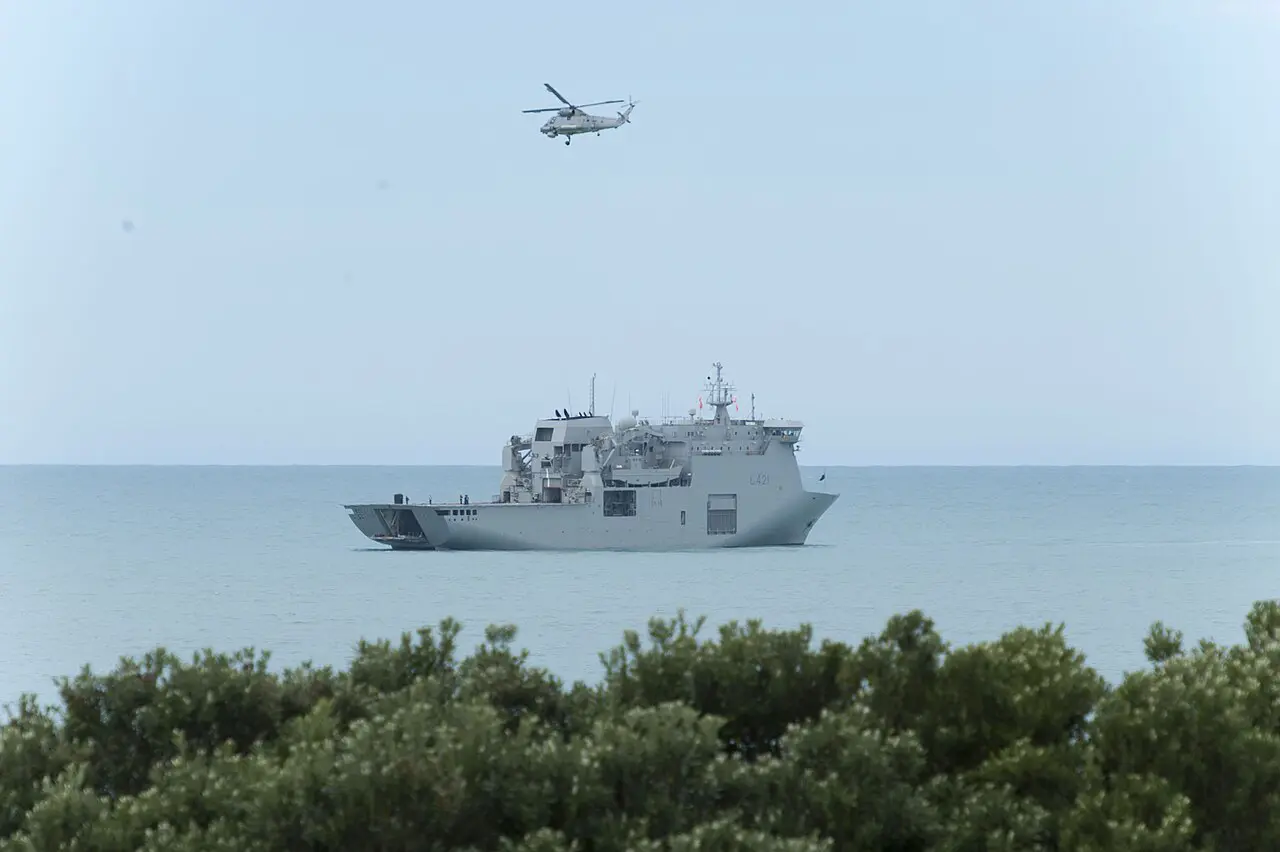
Rebuilding New Zealand’s Navy for Security, Not Aggression
In June, U.S. Defense Secretary Pete Hegseth accused New Zealand of “freeloading”, deriding the small country’s plans to nearly double its defense spending from 1.2% to 2% of GDP by 2032. “We demand 3.5% from our allies and partners, said Hegseth.”[1] New Zealand’s targeted 2% defense spending benchmark, which the U.S. now deems insufficient, was originally intended as a measure of burden-sharing only among U.S. NATO allies.
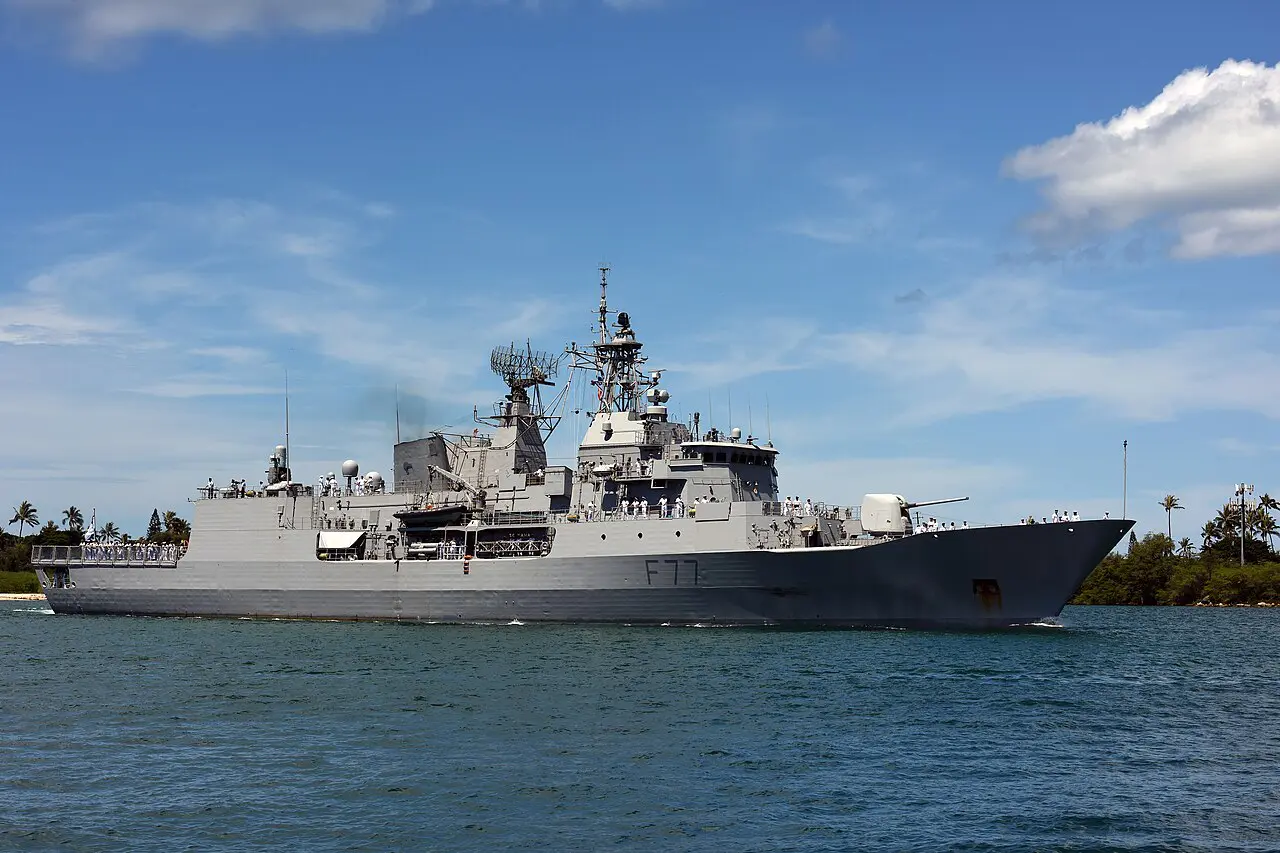
No amount of defense spending will be enough to rebuff spurious freeriding accusations from the Trump administration, accusations which will persist in Washington from the MAGA movement even after Trump. Despite the cries of freeriding, there’s no guarantee the United States would come to New Zealand’s assistance in the event of an emergency. The United States abrogated the U.S.-NZ Component of the trilateral ANZUS mutual defense treaty with Australia in 1986 to protest New Zealand’s nuclear-free policy.[2] Shortly thereafter, the New Zealand government made the controversial decision to maintain a frigate-based navy, replacing its Leander-class frigates with two ANZAC-class frigates, in part to reassure the U.S. and demonstrate its commitment to the extant NZ-Australia pillar of ANZUS. The ANZAC acquisition moved forward despite strong pushback from grassroots activists and some former Royal New Zealand Navy (RNZN) officials who objected to the warships’ enormous price tag and questionable utility for the isolated country’s unique security needs.[3] Since then, the HMNZS Te Kaha and HMNZS Te Mana ANZAC-class frigates have frequently worked with their American and Australian counterparts. They frequently join U.S.-led multilateral naval exercises in the Pacific like RIMPAC and participate in patrols as far afield as the South China and Arabian seas.
Today, New Zealand faces a similar choice, to materially commit to junior partner status in foreign conflicts, or to build its navy for the 2030s in a way that reflects actual security needs. This debate carries significant implications not only for the structure of New Zealand’s eight-ship navy, but also its broader defense strategy in the decades to come. With the ANZAC frigates set to reach the end of their usable life by the mid-2030s, the current New Zealand government is treating the decision to replace Te Kaha and Te Mana as a fait accompli with a final selection due next year. Yet both the geopolitical environment and warfare have changed significantly since the 1980s. For all Hegseth’s protestations of “freeloading,” the U.S. no longer provides global public goods, has become a significantly destabilizing actor on the world stage, and has actively undermined New Zealand’s economic and security interests. New Zealand’s frigates are unlikely to be a decisive factor in the outcome of a naval battle, but their role in helping the U.S. project power as part of a broader carrier fleet in far-flung waters risks further emboldening Washington to the detriment of New Zealand’s interests. Moreover, the ongoing wars in the Middle East and the Black Sea have demonstrated the inability of high-cost, state-of-the-art naval fleets to effectively counter cheap asymmetric threats like unmanned vessels and UAVs.
A July report on the frigate acquisition from the conservative New Zealand Initiative called for a “strategy first” debate “about capabilities across domains, not hardware in isolation” even as it claimed that the case for replacing the ANZAC frigates leaves “no serious analytical room for doubt.”[4] However, former Prime Minister Helen Clark has called for “a thorough assessment” of New Zealand’s “defense needs and priorities before committing to big-ticket items” like the frigates.[5] The question, in short, is whether frigates are even worth the cost relative to how much they’ll enhance or detract from New Zealand’s security needs.
The decision to replace the Te Kaha and Te Mana with at least two brand new frigates should not be treated as a given. The case for New Zealand replacing its frigates rests on faulty strategic assumptions predicated on a world which no longer exists. Maintaining a prestige Navy places enormous demands on the budget for a small country of roughly 5 million people with a GDP of approximately $450 billion NZD ($263.5 billion USD)[6], and which struggles to recruit and retain military personnel. Even with the move to spend 2% of New Zealand’s GDP on defense, the personnel and budgetary demands imposed by replacing the frigates would come at the opportunity cost of acquiring other capabilities better suited to its security goals, with much lower manpower and expenditure rates.
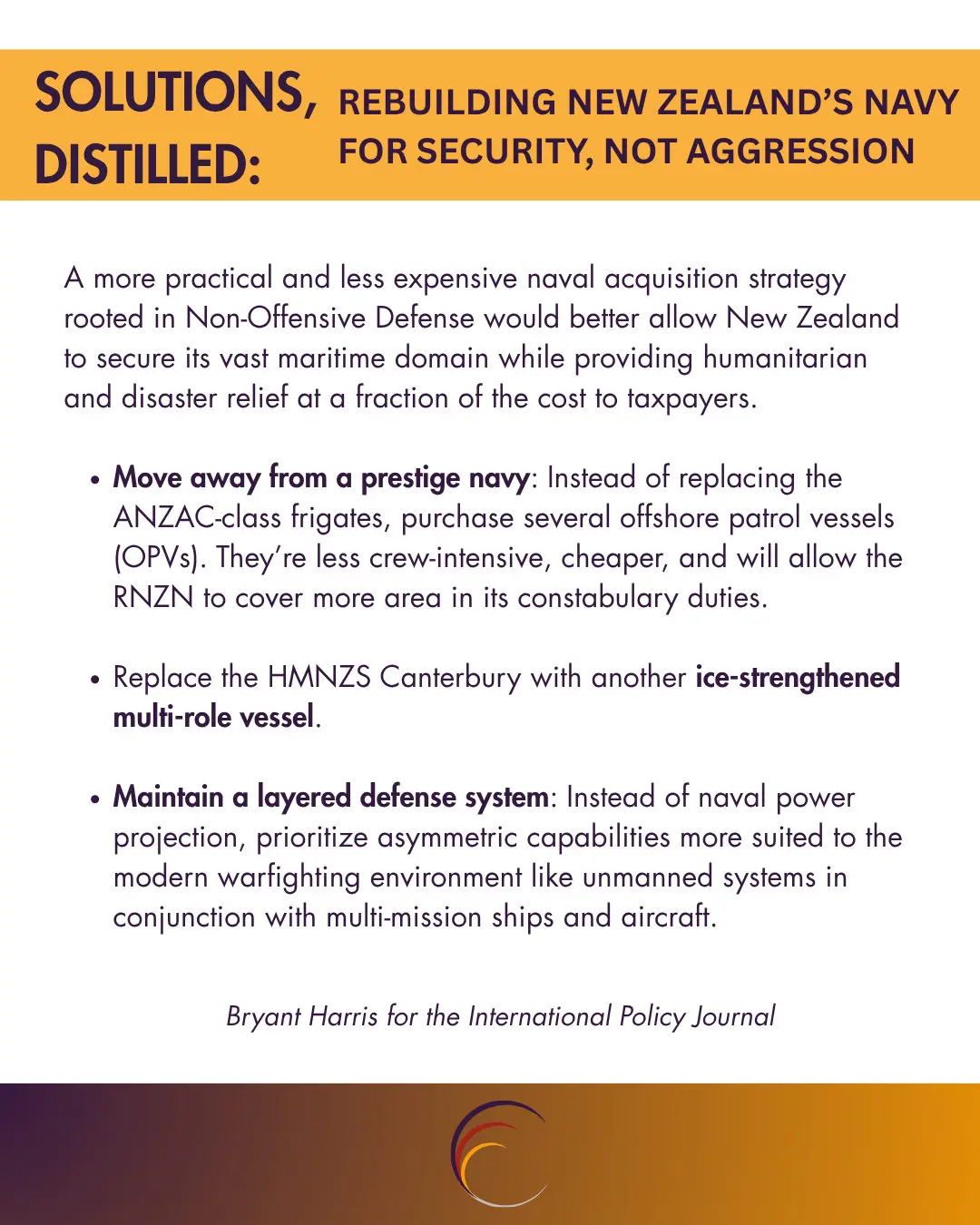
A more practical naval acquisition strategy rooted in the principles of Non-Offensive Defense – a military strategy that equips a country to defend its own territory while limiting its ability to wage war far from its shores – would better allow New Zealand to secure its vast maritime domain while still allowing it to come to the aid of its ally Australia and its Pacific partners. Foregoing costly prestige warships meant to project power abroad would provide more bandwidth to acquire capabilities better suited to the core constabulary, humanitarian, and disaster-relief functions expected of the RNZN all while consistently covering more nautical miles throughout New Zealand’s vast seaways. This could build and improve upon the layered self-defense and constabulary capabilities New Zealand already maintains, including offshore patrol vessels, multi-role vessels, unmanned systems, helicopters, as well as anti-submarine and anti-surface aircraft.
The Global Maritime Commons: The United States, China, and the Blue Pacific
Surrounded by the world’s largest moat, New Zealand lies more than 1,000 miles from the Australian mainland, its closest neighbor. This defensive advantage is a double-edged sword. New Zealand’s geographic isolation and tiny population makes it highly dependent on international trade, with 99.7% of trade volume moving by sea.[7] New Zealand’s Exclusive Economic Zone (EEZ) is more than 4 million square kilometers and its continental shelf extends another 1.7 million square kilometers beyond that.[8] This excludes the Pacific islands that New Zealand is obligated to help defend: the Cook Islands and Niue, self-governing states in free association with New Zealand, and Tokelau, a non-self-governing territory. The two ANZAC-class frigates are frequently on deployment well outside of this massive oceanic area. Even if they remained in the vicinity year-round, the millions of square kilometers are far too vast for two ships to effectively and efficiently patrol.
While New Zealand’s frigate proponents acknowledge that two warships cannot ensure the safety of international shipping lanes by themselves, they operate under a Mahanian logic in which a global hegemon (in this case, the United States), is needed to ensure the security of the global maritime commons. They argue that sending one or two frigates to patrol and fight alongside the U.S. Navy’s nearly 300 combat-capable vessels signals New Zealand’s resolve to the United States, Australia, and the rules-based international order. In reality, the Indo-Pacific operated as a non-hegemonic order with free and open trade in the thousands of years prior to British arrival.[9]
But even accepting the Mahanian logic of using naval power to secure sea lanes, the case for New Zealand frigates neglects the geopolitical reality that today’s dominant naval power – the United States – has not only ceased providing public goods but is now itself a significantly destabilizing actor when it comes to keeping both international trade and the global maritime commons free and open. Frigate proponents point to China’s aggressive extraterritorial maritime claims in the South China Sea. But they ignore the even more destabilizing U.S. maritime activities in the Persian Gulf and the Caribbean – to the detriment of New Zealand’s economic and security interests.
It’s no surprise that more New Zealanders now see the U.S. as a bigger threat than China. The Asia New Zealand Foundation’s annual Perceptions of Asia poll found that 35% of New Zealanders see the United States as a threat, while only 23% view China as a threat. (Likewise, 39% saw the U.S. as a friend versus 43% who saw China as a friend.)[10]
After launching its unprovoked war against Iran, U.S. conventional naval superiority could not prevent Tehran from shutting off commerce through the Strait of Hormuz. The U.S. then took a leaf out of Tehran’s playbook and instated its own blockade on the strait. The U.S. war has created astronomical gas prices for New Zealanders at the pump, compounded their cost of living crisis, and created fertilizer shortages in a trade-dependent country that relies on agriculture for 83% of its exports.[11] As it stands now, the crisis is likely to shave approximately $1.8 billion NZD off of New Zealand’s GDP, with that cost projected to rise to $2.9 billion NZD, roughly 1% of GDP, if the Strait of Hormuz remains closed through the end of the year.[12]
Economists expect New Zealand fuel prices to surge back up to April highs of around $3.48 NZD per liter (roughly $13.17 NZD per gallon) if the strait remains closed,[13] contributing to inflationary pressure and exacerbating the cost of living crisis for most New Zealanders.[14] The cherry on top: President Donald Trump recently hit New Zealand with his global 12.5% tariff over spurious forced labor allegations[15] after the Supreme Court struck down the last round of tariffs in February. All the while, the U.S. continues to bomb civilian vessels in the Caribbean and Eastern Pacific. Add that to the U.S. threats against the territorial integrity and sovereignty of its own allies and neighbors – Canada, Greenland, and Denmark – Washington’s assault on global stability and New Zealand’s economy suggests anticipating a future where Washington and Wellington’s interests diverge.
Yet New Zealand’s 2025 Defense Capability Plan labels the Indo-Pacific as “a primary geopolitical theater” for U.S.-China competition. It singles out Beijing’s growing military capability and its use of statecraft to “challenge both international norms of behavior and the security of other states.”[16] Additionally, New Zealand’s 2026 Security Threat Environment report identified a thwarted Chinese espionage attempt to fraudulently install satellite-tracking imagery on its shores.[17] New Zealand strongly criticized a Chinese ballistic missile test that fell in Pacific waters just south of the equator near Tuvalu, the same day Australia and Fiji signed a mutual defense treaty.[18] Notably, the United States also conducts multiple Minuteman III ICBM tests in the Pacific every year. These tests fall in the waters of the Marshall Islands, which is in a Compact of Free Association with the United States that gives Washington a veto over its defense affairs.
Additionally, three Chinese naval vessels carried out live-fire exercises last year in the international waters of the Tasman Sea separating New Zealand and Australia.[19] For its part in 2024, New Zealand joined the United States, Australia, Japan, and the Philippines for the first time in the South China Sea for live-fire drills in the Philippine EEZ, a part of the disputed area that Beijing claims for itself.[20] New Zealand also sailed the HMNZS Aotearoa, its logistics support vessel, through the Taiwan Strait in 2025, drawing Chinese criticism.[21] China, for the first time, issued a one-year visa ban on four New Zealand lawmakers in June over their trip to Taiwan.[22]
Despite their problematic behaviors, New Zealand has a disproportionate economic dependency on both great powers. A U.S.-China war that shut down trade lanes or forced New Zealand to pick a side would be even more devastating than the Strait of Hormuz shutdown. Beijing is Wellington’s largest trade partner, with New Zealand exporting some $22.82 billion NZD to China in 2024.[23] The United States is its second largest export market, importing $9 billion NZD in New Zealand goods in 2024.[24] If a U.S.-China cross-strait crisis shut down trade from Asia, New Zealand could expect to lose another $2.88 billion NZD in trade with Taiwan, its 13th largest trade partner.[25] Unlike the United States, China has not yet placed tariffs on New Zealand exports, though it did so on Australia in 2020 after Canberra called for an independent investigation into the origins of the COVID-19 pandemic.[26]
While Beijing remains New Zealand’s larger trade partner, Wellington’s economic interests require it to hedge between both China and the U.S. even as it seeks to diversify its export markets. If New Zealand bandwagons with the United States in a conflict with China despite Washington’s deleterious impact on its economic interests, Beijing is more likely to retaliate economically. New Zealand cannot stand up to either great power on its own, but it can work with other small and middle powers both inside and outside of its vast neighborhood to preserve the rules-based international order and properly secure its own expansive maritime zone – and help its Pacific Island partners do the same. New Zealand’s ASEAN trade partners, for instance, generally maintain good relations with both the U.S. and China. These countries refuse to participate in great power defense pacts, but they work together to provide collective regional and maritime security. Thailand, Singapore, Malaysia, Indonesia, and the Philippines work together to secure vital maritime trade routes through the respective Malacca Straits Patrol and the Sulu-Sulawesi Seas Patrols.[27]
The question, therefore, becomes how New Zealand can patrol its own EEZ and that of its Pacific Island Partners while keeping its maritime trade routes open in the context of an escalating feud between two disruptive, revisionist great powers. High-end warships like frigates operating in China’s backyard risk emboldening the United States and further enmeshing New Zealand in a militarized, high-stakes competition with its largest trading partner. Non-Offensive Defense, by contrast, places a premium on a nonprovocative force structure and would not turn New Zealand into a target should a great power erupt. A frigate-less navy would also free up the manpower and budget to operate more ships and unmanned systems in New Zealand’s own waters. This would provide much better area coverage and capabilities to perform crucial humanitarian and disaster response functions while countering piracy, smuggling, and illicit fishing.
Sunk Costs: What happens in a War with China?
Instead of securing New Zealand’s EEZ, the main capability frigates offer relative to other RNZN capabilities is the ability to fight a great power war against China, either directly in conjunction with an American aircraft carrier strike group or indirectly via Australia. Such a conflict is likely to happen right in China’s backyard. Despite increasingly militarized competition between the U.S. and China, Beijing is unlikely to be able to achieve regional, let alone global, hegemony even under its most favorable strategic conditions. But militarized great power competition could make U.S.-China war a self-fulfilling prophecy,[28] drawing New Zealand into a devastating conflict that runs squarely against its interests.
Beijing continues to steadily increase its conventional military capabilities relative to the United States in the Taiwan Strait and South China Sea. This is unsurprising given each theater’s proximity to China. A 2015 analysis from the RAND Corporation found that China has conventional superiority in a Taiwan Strait scenario and is rapidly degrading U.S. military superiority in a Spratley Islands scenario, to the point where Washington and its allies only maintained a slim advantage in the South China Sea.[29]
Multiple war games in Washington have found that the U.S. and its allies would lose dozens of ships in a war with China over a Taiwan invasion. Several rounds of a CSIS war game found that the U.S. and Taiwan were narrowly favored to win but highlighted the extreme vulnerability of surface ships. In the CSIS wargames, the U.S. and its allies lost 43 ships in the baseline scenario.[30] If New Zealand’s frigates were to guard a U.S. carrier strike group in a China conflict, there is a high chance they would be hit quickly – a literal sunk cost. With a defense budget of roughly $6 billion NZD for 2026,[31] such a loss would be even more devastating to New Zealand than similar losses would be to much larger, wealthier countries like the United States and Australia.
New Zealand’s frigates could help the United States and Australia fight Chinese surface vessels and submarines alike – albeit at high risk – but the current global security environment suggests that high-end naval superiority is largely ineffective at achieving military objectives. The failures of the United States and Russian navies to exert maritime control in the Strait of Hormuz, the Red Sea, and the Black Sea respectively indicate that low-cost, asymmetric capabilities like drones have created a defense-dominant arena which makes it difficult to rely on naval power projection.
The United States has endured a brutal cost-exchange ratio in its war against Iran, draining expensive munitions against significantly cheaper Shahed-136 and Fateh-110 series ballistic missiles. Even before the Iran war, U.S. munitions supplies were already under significant strain back in 2023 due to a similarly unfavorable cost-exchange ratio in the campaign against Yemen’s Houthis, who recently seized the Bab al-Mandab Strait. The Houthis have similarly used low-cost drones to strike ships in the Red Sea.[32] Even more strikingly, Ukraine has used inexpensive drones to sink several Russian naval vessels in the Black Sea.[33]
It will take years to restock U.S. munitions, and the shortage inhibits American military readiness against China in the Indo-Pacific.[34] The CSIS war game also found a high rate of U.S. munitions usage among the U.S. and its allies in a Taiwan scenario.[35] Lessons learned in the Middle East and the Black Sea indicate that New Zealand would be better served leaning into low-cost swarms of unmanned systems launched from a greater quantity of cheaper vessels rather than prestige warships, particularly if the primary objective is to secure an expansive maritime domain for itself and its allies.
Further out in the Pacific, the U.S. and its allies still enjoy conventional military superiority against China. But an active U.S.-China military confrontation in the Blue Pacific would likely only happen in the context of a war that started closer to the Chinese mainland. The best way to avoid militarized conflict in the Blue Pacific is to ensure full sovereignty for all Pacific Island states. The United States has military assets in the Marshall Islands, the Federated States of Micronesia, and Palau, holding veto power over their defense decisions as part of its Compact of Free Association with each state. The United States also exerts direct control over Guam, which hosts major military assets. U.S. power projection into the Blue Pacific encourages China to respond in kind. Ensuring full sovereignty for Pacific Island states would demilitarize the Blue Pacific, more effectively keeping both great powers in check .[36] Fully sovereign Pacific states would be able to hedge between both the U.S. and China, similar to the ASEAN states in southeast Asia.
As a member of the Pacific Islands Forum, a Non-Offensive Defense strategy would help New Zealand reassure the region that it intends to help keep the Blue Pacific open, sovereign, peaceful, and free of great power competition. Foregoing frigates in favor of capabilities more suited to defending the maritime domains of New Zealand and its Pacific partners would also help keep Wellington out of a disastrous great power war, provide more diplomatic leeway to help diffuse tensions between its two vital trading partners, and improve its ability to respond to the increasing frequency and severity of climate change-related natural disasters.
Opportunity Costs: Crew Shortages for Offshore Patrol Vessels
When the ANZAC-class frigates are on deployment in China’s backyard, the Middle East, or elsewhere, they are not available to patrol the waters of New Zealand, the Cook Islands, Niue, or Tokelau. The frigates spend most of their time on missions well outside these EEZs. Te Mana, for instance, participated in the U.S.-led RIMPAC exercise near Hawaii in July before moving onto northeast Asia in August, where it’s monitoring for North Korea sanctions breaches.[37] Meanwhile, the RNZN’s two offshore patrol vessels (OPVs), the HMNZS Otago and the HMNZS Wellington, have historically performed crucial constabulary missions like illicit fisheries patrols.
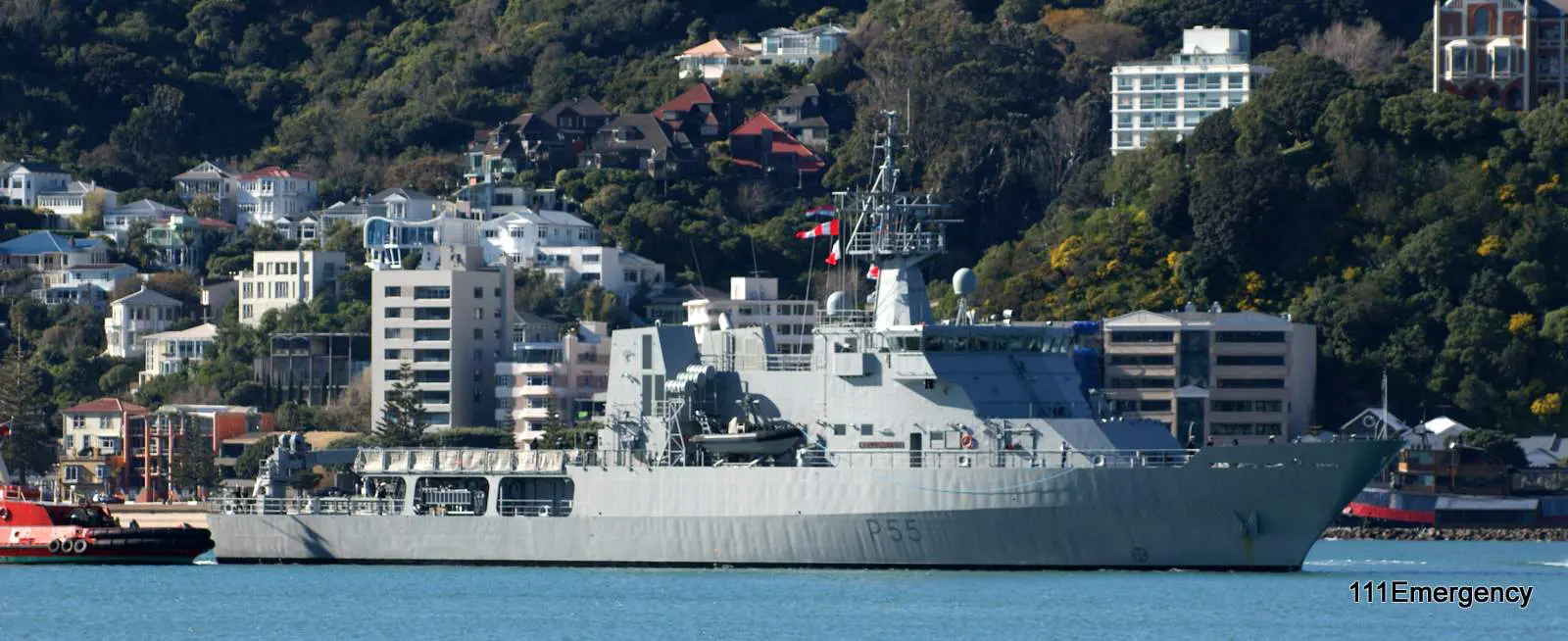
But instead of patrolling New Zealand’s waters, the two OPVs have mostly remained docked since 2022 because of personnel shortages,[38] even as the more crew-intensive ANZAC frigates continue to operate in far-flung waters. The New Zealand Defence Force (NZDF) attrition rate that year peaked as high as 16.5%, in part due to low wages.[39] At the time, the RNZN numbered roughly 2,800 personnel.[40] The number of RNZN personnel has only increased slightly since then and currently stands at 2,938.[41] The regular force NZDF attrition rate has also declined by more than half since 2022, but it was still 6.8% as of June 2025.[42]
In 2024, the RNZN “initiated efforts to restore the operational condition” of the Otago,[43] but the Wellington remains docked at Devonport Naval Base. The ANZAC frigates, meanwhile, have remained in deployment during that time, mostly outside of New Zealand waters where they’re unable to perform illicit fisheries patrols and other constabulary functions that are better suited to OPVs. Not only are OPVs cheaper than frigates, they also require substantially less crew. The Otago and Wellington only require a core crew of 42 sailors and 12 flight personnel per vessel. Conversely, both ANZAC-class frigates require a crew of up to 172 sailors. Given the cheaper price tag and smaller personnel requirements, a greater number of offshore patrol vessels – not frigates – would be better able to control New Zealand’s massive EEZ.
Cascading Costs: Frigates and New Zealand’s Strained Budget
New Zealand taxpayers could face upfront costs as high as $8 billion NZD to $9 billion NZD to replace the ANZACs, with conservative estimates coming in at the $6 billion NZD to $8 billion NZD range.[44] That number excludes the inevitable sustainment and modernization costs down the line, eating a significant chunk out of its budget and defense spending increases. For comparison, New Zealand’s 2026 defense budget was $5.8 billion NZD[45] out of $155 billion NZD total in government spending.[46] The 2025 Defence Capability Plan outlines $12 billion NZD in investments, including $9 billion NZD in new money, over the next four years to modernize the defense force. This includes anywhere from $300 million NZD to $600 million NZD to extend the life of the ANZAC-class frigates through the mid-2030s, another $2 billion to replace the RNZN’s aging maritime helicopters, and $50 million for future upgrades at Devonport Naval Base.[47]
Proponents of replacing the ANZACs are seriously considering following Australia’s lead and purchasing Japan’s Upgraded Mogami-class frigates to ensure interoperability with the Australian Navy. The initial contract for the first three Upgraded Mogamis cost Australia $10 billion AUD,[48] approximately $12.2 billion NZD. Thus, New Zealand could expect to pay an initial contract cost of roughly $8 billion NZD for two Upgraded Mogami frigates, excluding future costs down the line. Alternatively, some frigate proponents are looking at Britain’s cheaper Type 31 frigate, arguing that the lower cost would allow New Zealand to buy at least four frigates total. The Type 31 hull could cost at least £400 million per hull[49] (roughly $900 million NZD), excluding weapons systems which would push the total contract cost even higher. British defense readiness and industry minister, Luke Pollard, made the case for the Type 31 frigate in August while dangling the possibility of New Zealand joining the advanced technologies pillar of the trilateral AUKUS pact between Australia, the United Kingdom, and the United States.[50]
Regardless of initial contract costs, New Zealand will have to continue shelling out significant amounts of money to sustain any type of frigate throughout the course of its lifespan, modernizing weapons systems and overhauling engines. The ANZAC frigates provide an illuminating example. The John Key government in 2014 signed a $419 million NZD contract with Lockheed Martin Canada for a half-life systems upgrade of the ANZACs. But the price tag ballooned to $639 million NZD due to significant cost overruns.[51] Prior to that, the Helen Clark government in 2007 allocated between $50 million NZD to $60 million NZD in ANZAC upgrades.[52] The Jacinda Ardern government in 2021 also allocated $21 million NZD in ANZAC communications upgrades.[53] And that was all before the latest tranche of upcoming expenditures, between $300 million NZD to $600 million NZD, needed to keep the ANZACs operational through the end of their lives in the mid-2030s.
Additionally, the State Department in June approved a $2.6 billion NZD sale of five MH-60R Seahawk helicopters to New Zealand.[54] The Otago and Wellington offshore patrol vessels are currently capable of carrying the SH-2G(I) Super Seasprite maritime helicopters,[55] though it would be challenging to launch the Seahawks from those vessels given their heavier weight. While frigate proponents have used the Seahawk acquisition as another reason to justify replacing the ANZACs, the Seahawks could still deploy from the Canterbury or Aotearoa. Additionally, in the future New Zealand could either acquire OPVs capable of adequately carrying the Seahawks or find appropriately sized helicopters for whatever type of OPV it acquires. Either way, justifying a multi-billion-dollar frigate purchase after a $2.6 billion NZD helicopter acquisition represents yet another sunk cost predicated on circular logic.
Securing New Zealand Waters while Honoring its Pacific Commitments
A reimagined New Zealand navy, rooted in Non-Offensive Defense – not heavily-armed prestige warships deployed on missions in distant waters – would provide New Zealand with more capacity and capability to secure its own maritime domains, keep its trade routes flowing, help Australia and its Pacific allies do the same, and provide crucial humanitarian and disaster relief. When they’re not docked due to personnel shortages, the Otago and Wellington have historically fulfilled these functions effectively. Replacing the frigates with additional OPVs, at a fraction of the cost, in conjunction with swarms of unmanned systems, the Canterbury multi-role ship, and the Aotearoa polar logistics tanker would allow New Zealand to patrol a much broader area, crack down on more illicit activity, and provide more capacity to cover a vast maritime domain. Two, three, or even four high-end frigates that frequently patrol outside New Zealand’s EEZ cannot provide the same level of coverage. And they’re less well-suited to crucial humanitarian, disaster-relief, and constabulary roles than the RNZN’s other vessels.
Although it has generated significantly less attention, the RNZN’s two Protector-Class patrol vessels, the Otago and Wellington, will also require replacement in the mid-2030s, as will the Canterbury multi-role vessel. A basic offshore patrol vessel costs between $40 million to $60 million USD (roughly $68 million to $103 million NZD) or more than $100 million USD ($171 million NZD) for OPVs with warfighting capabilities.[56] For comparison, in the early 2000s, the Otago acquisition cost $110 million NZD[57] and the Canterbury cost $130 million NZD.[58] Both were acquired as part of the $500 million NZD Project Protector package, which included New Zealand’s two OPVs, the Canterbury multi-role vessel, and four inshore patrol vessels.[59]
This is a significant acquisition expense for a small country, to be sure, but it pales in comparison to even the cheapest frigate, providing a much better value at a portion of the cost. Acquiring several more lightly crewed OPVs, while replacing the Canterbury with another ice-hardened multi-role vessel and retaining the Aotearoa logistics vessel, would allow the RNZN to more efficiently and effectively carry out its constabulary, humanitarian, and disaster relief duties at a fraction of the cost and manpower.
Some have argued that acquiring the cheaper Type 31 frigate instead of the Upgraded Mogami would allow New Zealand to acquire more vessels and cover more of its EEZ even as they continue to deploy on missions with the U.S. well outside the neighborhood, including in East Asia and the Middle East. Both the ANZAC-class frigates and Protector-class OPVs provide a cruising range of 6,000 nautical miles.[60] The only significant additional capability frigates provide that OPVs lack is the ability to fight a great power war with China, primarily as part of a U.S. carrier strike group.
Investing in significantly cheaper, less crew-intensive OPVs designed to operate closer to home rather than project power abroad, would allow the RNZN greater capacity and capability to secure its extensive EEZ while helping its Pacific partners. Rather than moving beyond a two-frigate navy, New Zealand could move beyond a two-OPV navy with much less strenuous manpower and budgetary requirements. The greater number of OPVs would also provide more leeway if one of the ships requires prolonged maintenance.
Unmanned systems can deploy just as easily from these other ships as they can from frigates while covering more territory. The wars in the Red Sea, Strait of Hormuz, and Black Sea strongly indicate that drones have created a defense-dominant environment in which conventional naval power projection has become less relevant and more costly. The New Zealand government is paying attention, setting aside between $100 million to $300 million NZD for long-range strike drones in the 2025 Defence Capability Plan.[61] A Non-Offensive Defense strategy places more emphasis on these unmanned systems launched from a greater number of vessels than on costly high-end frigates.
Finally, the Boeing P-8A Poseidon maritime patrol aircraft already provides the capability New Zealand needs for anti-submarine warfare if it were to forgo frigates. New Zealand purchased four of these aircraft in a $2.3 billion NZD deal with the United States in 2018, and they became fully operational in 2023.[62] In addition to anti-submarine and anti-surface warfare, the P8-A Poseidons provide another capability for maritime surveillance as well as post-disaster survey work. New Zealand’s fleet of five C-130J Super Hercules aircraft also provides it with the capacity to respond to humanitarian crises and disasters with the capacity to airdrop supplies.[63]
Royal New Zealand Navy assets are also a crucial component of humanitarian and disaster relief operations both within the earthquake-prone country and further afield in the Blue Pacific. The need for these capabilities has only increased given the increased severity and frequency of cyclones and other extreme weather events as climate change worsens. The ANZAC-class frigates sometimes participate in these operations when they happen to be in the neighborhood.But they’re less suited to humanitarian and disaster-relief missions than some of the other ships in New Zealand’s fleet, particularly the Canterbury, a multi-role vessel with an onboard hospital. The Canterbury was the backbone of the RNZN’s response to the 2011 Christchurch earthquake, in conjunction with the Otago and two other ships. Neither ANZAC frigate participated in that recovery effort.[64] In the 2016 Kaikoura earthquake, the Canterbury was joined by New Zealand’s other OPV, the Wellington, as well as the Te Kaha frigate.[65] Yet again in 2022, the Canterbury came to the aid of Tonga alongside the Aotearoa logistics support ship after Cyclone Winston devastated the island. The Wellington OPV also responded to that crisis, but not the ANZAC frigates.[66] Additionally, the Canterbury carried the bulk of the supplies for the relief effort after Cyclone Gabriel hammered New Zealand’s north island in 2023, though the Te Mana frigate also carried 26 tons of aid.[67]
The best defense is a non-offense
If frigates are away on patrol in the Taiwan Strait or the Arabian Sea, New Zealand has less capacity to secure its own waters and carry out its constabulary duties like illicit fisheries patrols, counter-piracy, anti-smuggling, and border enforcement operations. This problem becomes particularly acute when its two offshore patrol vessels remain docked due to personnel shortages. Moving away from a frigate-based navy would give New Zealand greater capacity to perform these functions more effectively and efficiently.
Frigate proponents point to the increased volatility and instability of the current strategic environment. They’re right to do so. But their arguments remain stuck in a world where the United States is a hegemon that provides global public goods and acts as a reliable, trustworthy partner for New Zealand. The United States’ destabilizing actions at sea and flagrant flouting of the very global trade norms it once championed have disrupted the free flow of commerce New Zealand depends on while exacerbating its cost-of-living crisis.
Two, three, or even four frigates on their own cannot effectively fight a war against an adversary. The logic for frigates rests on the presumption of working with the United States to deter China as part of a broader fleet. Neither the U.S. nor China are benign strategic actors. New Zealand’s security and economic interests are better served by emboldening neither and preserving its relationship with both. With both great powers challenging the basic principles of sovereignty and the rules-based international order, it falls to small and middle powers like New Zealand to coalesce together and resist the brute force domination of great power politics.
New Zealand’s isolated geographic position makes it well-suited to achieve this goal through a more cost-effective military acquisition strategy rooted in Non-Offensive Defense. This would prioritize capabilities needed to secure its maritime domains and come to the aid of its Pacific allies and partners. The recent wars in the Red Sea, the Persian Gulf, and the Black Sea highlight the limits of naval power projection. Swarms of unmanned systems have sunk Russian ships and drained American munitions. New Zealand’s defense needs would be better served by investing in similar asymmetric capabilities launched from a greater quantity of lower-cost vessels that can more efficiently patrol and defend its waters. In the new strategic landscape, investing in additional frigates at the expense of other defense and domestic priorities could quite easily become a literal sunk cost.
Bryant Harris is a former journalist with more than 10 years of experience covering U.S. foreign and defense policy from the White House and Capitol Hill. He is currently pursuing his Master of Strategic Studies at Victoria University of Wellington in New Zealand. You can follow him on Bluesky.
Bibliography
[1] Phil Pennington, “Pete Hegseth’s ‘freeloading’ snipe: Should NZ be worried?” RNZ, June 2, 2026 https://www.rnz.co.nz/news/politics/597035/pete-hegseth-s-freeloading-snipe-should-nz-be-worried
[2] U.S. Department of State, “The Australia, New Zealand, and United States Security Treaty (ANZUS Treaty), 1951,” Office of the Historian, accessed August 21, 2026 https://history.state.gov/milestones/1945-1952/anzus
[3] Peter Greener, Timing is Everything: The Politics and Processes of New Zealand Defence Acquisition Making, (Australian National University Press), Chapter 2 https://press-files.anu.edu.au/downloads/press/p22051/mobile/ch02s03.html
[4] John Howard, Adrift: A Trading Nation, An Ageing Navy, and the 2027 Frigate Decision, New Zealand Initiative, July 2026. https://www.nzinitiative.org.nz/reports-and-media/reports/adrift-a-trading-nation-an-ageing-navy-and-the-2027-frigate-decision/document/941
[5] Helen Clark, X. https://x.com/HelenClarkNZ/status/2082622476555829586
[6] Stats NZ, “Gross Domestic Product (GDP)” accessed August 21 2026. https://www.stats.govt.nz/indicators/gross-domestic-product-gdp/
[7] Ministry for Cities, Environment, Regions & Transport, “Freight and Logistics” accessed August 22, 2026. https://www.transport.govt.nz/statistics-and-insights/freight-and-logistics/sheet/figs-trade
[8] New Zealand Foreign Affairs & Trade, “Our maritime zones and boundaries,” accessed August 23, 2026. https://www.mfat.govt.nz/en/environment/oceans-and-fisheries/our-maritime-zones-and-boundaries
[9] Amitav Acharya and Manjeet S. Pardesi, What the Ancient Mediterranean and Indian Ocean Can Tell Us About the Future of the International Order (Yale University Press), Chapter 3. 2025.
[10] Asia New Zealand Foundation, Perceptions of Asia: New Zealanders’ Perceptions of Asia and Asian Peoples, June 2026. https://www.datocms-assets.com/125706/1780880933-perceptions-of-asia-and-asian-peoples-2026.pdf?skip-default-optimizations=true
[11] Todd McClay. “Food and fibre exports set to reach $62 billion.” December 16, 2025. https://www.beehive.govt.nz/release/food-and-fibre-exports-set-reach-record-62-billion
[12] RNZ, “Strait of Hormuz closure significant, but not massive blow for NZ economy, new analysis shows,” June 4, 2026. https://www.rnz.co.nz/news/business/597204/strait-of-hormuz-closure-significant-but-not-massive-blow-for-nz-economy-new-analysis-shows
[13] Corin Dann, “Oil Price Shock for New Zealand far from over – Westpac economist,” RNZ, July 24, 2026. https://www.rnz.co.nz/news/business/781190/oil-price-shock-for-new-zealand-far-from-over-westpac-economist
[14] 1News, “Cost Shock’: Strait of Hormuz closure hits more than fuel prices – ASB,” May 25, 2026. https://www.1news.co.nz/2026/05/25/cost-shock-strait-of-hormuz-closure-hits-more-than-fuel-prices-asb/
[15] Anan Zaki and Jeffrey Haley, “US hits New Zealand with higher 12.5 percent tariff,” RNZ, July 24, 2026. https://www.rnz.co.nz/news/business/782170/us-hits-new-zealand-with-higher-12-point-5-percent-tariff
[16] New Zealand Ministry of Defence. “2025 Defence Capability Plan.” April 7, 2025. https://www.defence.govt.nz/assets/publications/Defence-Capability-Plan-25.pdf
[17] Alexia Russell, “NZSIS steps out of diplomatic shadow on China,” August 19. 2026. https://newsroom.co.nz/2026/08/19/nzsis-steps-out-of-diplomatic-shadow-on-china/?utm_source=substack&utm_medium=email
[18] Lillian Hanley and Russell Palmer, “China Missile Test in South Pacific ‘extremely unwelcome behaviour’, Deputy Prime Minister David Seymour says,” RNZ, July 7, 2026,https://www.rnz.co.nz/news/politics/682446/china-missile-test-in-south-pacific-extremely-unwelcome-behaviour-deputy-prime-minister-david-seymour-says
[19] RNZ, “What we know about the Chinese vessels conducting military exercises in the Tasman Sea,” February 25, 2025, https://www.rnz.co.nz/news/chinese/542972/what-we-know-about-the-chinese-vessels-conducting-military-exercises-in-the-tasman-sea
[20] Neil Jerome Morales, “US, Asia-Pacific nations hold joint maritime exercises in South China Sea,” Reuters, September 24, 2024. https://www.reuters.com/world/philippines-us-australia-japan-new-zealand-hold-joint-maritime-activity-south-2024-09-28/
[21] RNZ, “New Zealand’s biggest Navy ship made transit through sensitive Taiwan Strait this month,” November 27, 2025. https://www.rnz.co.nz/news/politics/580233/new-zealand-s-biggest-navy-ship-made-transit-through-sensitive-taiwan-strait-this-month
[22] Koh Ewe, “China bans four New Zealand MPs over Taiwan visit,” BBC, June 4, 2026. https://www.bbc.com/news/articles/cx21r1y223ro
[23] New Zealand Foreign Affairs & Trade, “Key facts on New Zealand-China trade,” accessed August 23, 2026. https://www.mfat.govt.nz/en/trade/free-trade-agreements/free-trade-agreements-in-force/nz-china-free-trade-agreement/key-facts-on-new-zealand-china-trade
[24] Stats NZ, “US now New Zealand’s second largest export partner,” January 30, 2025. https://www.stats.govt.nz/news/us-now-new-zealands-second-largest-export-partner/
[25] New Zealand Commerce and Industry Office, “New Zealand and Taiwan,” accessed August 23, 2026. https://www.nzcio.com/en/relationship-between-new-zealand-and-taiwan/new-zealand-and-taiwan
[26] Emily Clark, “New Zealand’s trading relationship with China is worth $19b and experts say that leaves the country ‘significantly exposed,” ABC, April 24, 2021. https://www.abc.net.au/news/2021-04-24/new-zealand-china-trade-difference-australia-/100090878
[27] Manjeet Pardesi, “The Liberal International Order as a Core-Periphery Order: An Alternative History with Multiple Deep Contestations,” Deep Contestations of the Liberal International Order, edited by Antje Wiener, David A. Lake, and Thomas Risse, (Oxford University Press), Chapter 10, 2026.
[28] Stephen Walt, “Stop Worrying About Chinese Hegemony in Asia,” Foreign Policy, May 31, 2023. https://foreignpolicy.com/2023/05/31/stop-worrying-about-chinese-hegemony-in-asia/
[29] RAND Project AIR FORCE, “An Interactive Look at the U.S.-China Military Scorecard,” RAND Corporation, 2015. https://www.rand.org/paf/projects/us-china-scorecard.html
[30] Mark F. Cancian, Matthew Cancian, and Eric Heginbotham, The First Battle of the Next War: Wargaming a Chinese Invasion of Taiwan, CSIS, January 2023. https://csis-website-prod.s3.amazonaws.com/s3fs-public/publication/230109_Cancian_FirstBattle_NextWar.pdf?VersionId=XlDrfCUHet8OZSOYW_9PWx3xtc0ScGHn
[31] Janes, “New Zealand’s 2026 defence budget increases by 6%,” May 29, 2026. https://www.janes.com/defence-intelligence-insights/defence-news/sea/new-zealands-2026-defence-budget-increases-by-6
[32] Bryant Harris and Noah Robertson, “Soaring US munitions demand strains support for Israel, Ukraine, Taiwan,” Defense News, April 30, 2024. https://www.defensenews.com/pentagon/2024/04/30/soaring-us-munitions-demand-strains-support-for-israel-ukraine-taiwan/
[33] Chris Kremidas-Courtney, “The new economics of warfare,” European Policy Centre, March 9, 2026. https://www.epc.eu/publication/the-new-economics-of-warfare/
[34] Bernd Debusmann Jr, “As the US pauses the war with Iran, is Trump really running out of weapons?” BBC, July 27, 2026. https://www.bbc.com/news/articles/c0qvnk2ezp7o
[35] Cancian et al, The First Battle of the Next War: Wargaming a Chinese Invasion of Taiwan.
[36] Van Jackson, “Geopolitical sacrifice zones in US strategic thought: erasure, the frontier and the Blue Pacific,” Cambridge Review of International Affairs, Vol. 38, No. 4, 2025, https://doi.org/10.1080/09557571.2025.2501595
[37] New Zealand Defence Force, “NZDF contributes to multinational activities in the Indo-Pacific region,” August 17, 2026. https://www.nzdf.mil.nz/air-force/air-force-news/nzdf-contributes-to-multinational-activities-in-the-indo-pacific-region/
[38] Nick Lee-Frampton, “A third of New Zealand’s Navy ships are docked over lack of crew,” Defense News, December 10, 2022. https://www.defensenews.com/naval/2022/12/09/a-third-of-new-zealands-navy-ships-are-docked-over-lack-of-crew/
[39] Laura Walters, “Jumping ship,” Monocle, March 2023. https://monocle.com/affairs/defence/new-zealand-navy-recruitment-crisis-ships-docked/
[40] Lucy Craymer, “New Zealand navy idles ships as labour crisis hits,” Reuters, December 7, 2022. https://www.reuters.com/world/asia-pacific/new-zealand-navy-idles-ships-labour-crisis-hits-2022-12-07/
[41] New Zealand Defence Force, People, Structure & Leadership, accessed August 27, 2026. https://www.nzdf.mil.nz/nzdf/who-we-are/people-structure-and-leadership/
[42] New Zealand Defence Force, Open Information Act Request, OIA-2026-5633, January 22, 2026. https://www.nzdf.mil.nz/assets/Uploads/DocumentLibrary/OIA-2026-5633-Comments-made-at-Scrutiny-Week.pdf
[43] New Zealand Defence Force, ANNUAL REPORT PŪRONGO ĀTAU 2025, 2025. https://www.nzdf.mil.nz/media-centre/search-our-libraries/documents/?search=annual+report+2025&sort=relevance
[44] Gordon Campbell, “Gordon Campbell on our Looming Spending Spree on Japanese Frigates,” Werewolf, October 30, 2025. https://werewolf.co.nz/2025/10/gordon-campbell-on-our-looming-spending-spree-on-japanese-frigates/
[45] New Zealand Defence Force, “Budget 2026 shores up maritime security,” May 25, 2026. https://www.nzdf.mil.nz/media-centre/news/budget-2026-shores-up-maritime-security/
[46] New Zealand Government, Securing New Zealand’s Future: Budget at a Glance, May 28, 2026. https://www.treasury.govt.nz/sites/default/files/2026-05/b26-at-a-glance.pdf
[47] New Zealand Ministry of Defence. “2025 Defence Capability Plan.” April 7, 2025. https://www.defence.govt.nz/assets/publications/Defence-Capability-Plan-25.pdf
[48] Stephen Dziedzic, “Australia picks Japan to build $10b frigates after fierce contest,” ABC News, August 5, 2025. https://www.abc.net.au/news/2025-08-05/australia-japan-navy-frigates/105613688
[49] Navy Lookout, “A Guide to the Type 31 Frigate,” accessed August 29, 2026. https://www.navylookout.com/a-guide-to-the-type-31-frigate/
[50] Sam Sachdeva, “UK pitches military tech role and navy frigate deal to NZ,” Newsroom, August 17, 2026. https://newsroom.co.nz/2026/08/17/uk-pitches-military-tech-role-and-navy-frigate-deal-to-nz/?utm_source=substack&utm_medium=email
[51] Beehive, “Government resolves Defence costs blowout,” December 13, 2017. https://www.beehive.govt.nz/release/government-resolves-defence-cost-blowout
[52] Beehive, “Multi-million upgrade for ANZAC frigates,” November 23, 2007. https://www.beehive.govt.nz/release/multi-million-dollar-upgrade-anzac-frigates
[53] Naval Today, “New Zealand invests $21.2M in ANZAC-class frigate communication upgrades,” August 19, 2021. https://www.navaltoday.com/2021/08/19/new-zealand-invests-21-2m-for-anzac-class-frigate-communication-updates
[54] RNZ/AFP, “NZ’s $2.6 billion military helicopter purchase approved by US,” June 6, 2026. https://www.rnz.co.nz/news/politics/597409/nz-s-2-point-6-billion-military-helicopter-purchase-approved-by-us
[55] New Zealand Ministry of Defence. “2025 Defence Capability Plan.” April 7, 2025. https://www.defence.govt.nz/assets/publications/Defence-Capability-Plan-25.pdf
[56] Market Growth Reports, “Offshore Patrol Vessels Market Overview,” August 26, 2026. https://www.marketgrowthreports.com/market-reports/offshore-patrol-vessels-market-103668
[57] RNZ, “Offshore Patrol Boat arrives in home port,” July 22, 2010. https://www.rnz.co.nz/news/regions/54394/offshore-patrol-boat-arrives-in-home-port
[58] Greg Ansley, “Canterbury off to work at once,” The New Zealand Herald, June 13, 2007. https://www.nzherald.co.nz/nz/canterbury-off-to-work-at-once/JZT57H2LAYNB57NZBNWJQQJVSI/
[59] Beehive, “First New Navy Patrol Vessels Launched Today,” November 19, 2006. https://www.beehive.govt.nz/release/first-new-navy-patrol-vessel-launched-today
[60] New Zealand Defence Force, “HMNZS Te Kaha” and “HMNZS Wellington,” accessed September 3, 2026. https://www.nzdf.mil.nz/nzdf/our-equipment/ships-and-watercraft/hmnzs-te-kaha/
https://www.nzdf.mil.nz/nzdf/our-equipment/ships-and-watercraft/hmnzs-wellington
[61] New Zealand Ministry of Defence. “2025 Defence Capability Plan.” April 7, 2025. https://www.defence.govt.nz/assets/publications/Defence-Capability-Plan-25.pdf
[62] Beehive, “New Zealand to buy four P-8A Poseidon Maritime Patrol Aircraft,” July 9, 2018. https://www.beehive.govt.nz/release/new-zealand-buy-four-p-8a-poseidon-maritime-patrol-aircraft
[63] NZDF, “C-130J-30 Hercules,” accessed September 7, 2026. https://www.nzdf.mil.nz/nzdf/our-equipment/aircraft/c-130j-30-hercules/
[64] Torpedo Bay Navy Museum, “Christchurch earthquake,” accessed August 27, 2026. https://navymuseum.co.nz/explore/by-themes/1970-today/christchurch-earthquake/
[65] Matthew Brockett, “International Warships Sail to Aid of Quake-Stricken N.Z.-town,” Bloomberg, November 15, 2016. https://www.bloomberg.com/news/articles/2016-11-15/international-warships-sail-to-aid-of-quake-stricken-n-z-town
[66] New Zealand Foreign Affairs & Trade, “New Zealand High Commission Tonga Volcanic Eruption and Tsunami: Update Seven,” January 24, 2022. https://reliefweb.int/report/tonga/new-zealand-high-commission-tonga-volcanic-eruption-and-tsunami-update-seven-2312022
[67] New Zealand Defence Force, “HMNZS Canterbury loads up for Napier,” accessed August 27, 2026. https://www.nzdf.mil.nz/media-centre/news/hmnzs-canterbury-loads-up-for-napier/

Related resources
-

-
-